




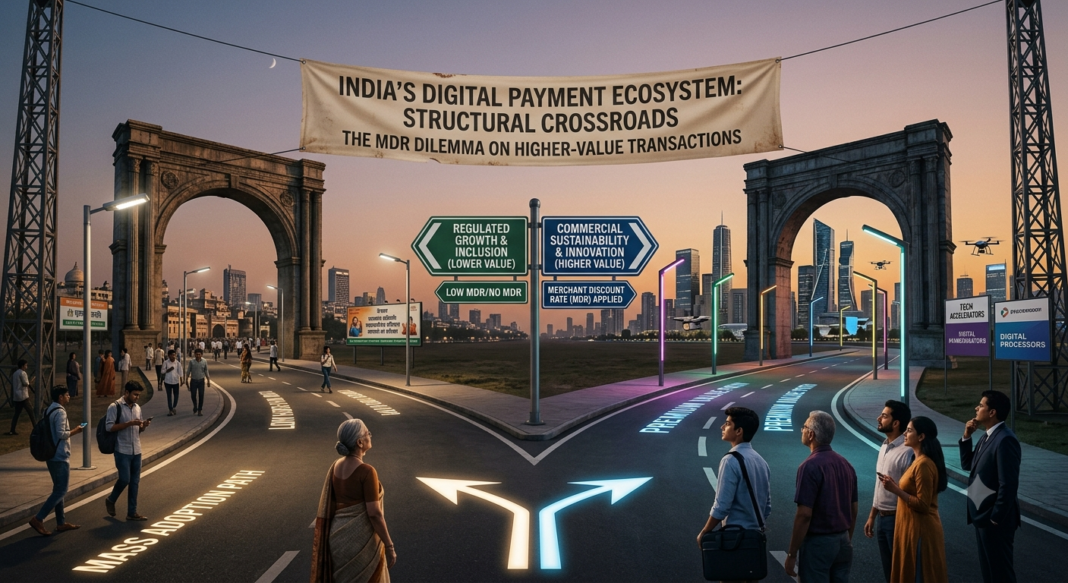
As the government permits a merchant discount rate on higher-value digital transactions, India’s digital payment ecosystem reaches a structural crossroads.
By Capital Chanakya
India’s digital payments infrastructure has entered a new regulatory phase. Following an amendment to the Payment and Settlement Systems Act and subsequent notifications by the National Payments Corporation of India (NPCI), the long-standing “Zero-MDR” framework is being restructured.
Beginning October 15, 2026, a 0.4 percent Merchant Discount Rate (MDR) will apply to specified Person-to-Merchant (P2M) UPI transactions above ₹2,000, capped at ₹300 for high-value payments.
The policy shift addresses a growing operational reality: processing billions of daily transactions without direct fee revenue has strained the financial institutions and payment aggregators managing the underlying technology. By introducing a targeted levy on mid-to-large merchant transfers, regulatory authorities aim to create a self-sustaining funding mechanism for network security, server capacity, and system reliability.
Key Mechanics
The new regulatory framework carefully distinguishes between individual users, micro-vendors, and larger commercial entities:
Zero Cost for Consumers: Person-to-Person (P2P) transfers—such as sending money to family or splitting bills—remain entirely free regardless of the amount. Payment service providers are prohibited from passing the MDR down to buyers as platform surcharges.
Safeguards for Micro-Merchants: P2M transactions up to ₹2,000 remain subject to zero MDR, preserving fee-free transactions for over 95 percent of daily retail payment volume. Furthermore, small merchants earning up to ₹1 lakh monthly via UPI QR codes remain fully exempt.
Concessional Capping for Essential Sectors: Utility bill payments, fuel purchases, telecom services, and railway ticketing above ₹2,000 will be subject to a flat ₹5 fee rather than the percentage-based levy.
Operational and Economic Implications
For commercial banks and payment gateways, the implementation of MDR provides a long-sought revenue stream. Operating real-time digital settlement systems requires heavy ongoing investments in server redundancy, fraud detection engines, and customer support channels.
Previously, these operational expenditures were partially offset by annual central government subsidies. Establishing a formal MDR framework redistributes the cost of maintaining digital infrastructure directly across the commercial ecosystem, allowing processing entities to reinvest in technology up-time and mitigate system outages during peak trading hours.
Simultaneously, the shift further reduces the banking sector’s operational reliance on physical currency. By maintaining zero fees on low-value purchases, the framework ensures that routine cash-handling expenses—such as currency printing, vault management, and automated teller machine logistics—remain suppressed without disrupting micro-commerce.
Retailer Pushback and the “Pass-Through” Concern
Despite regulatory safeguards, the policy decision has drawn sharp debate from merchant associations and trade federations. Medium-sized businesses and consumer electronics retailers operating just above the ₹2,000 threshold argue that a 0.4 percent fee squeezes already narrow profit margins.
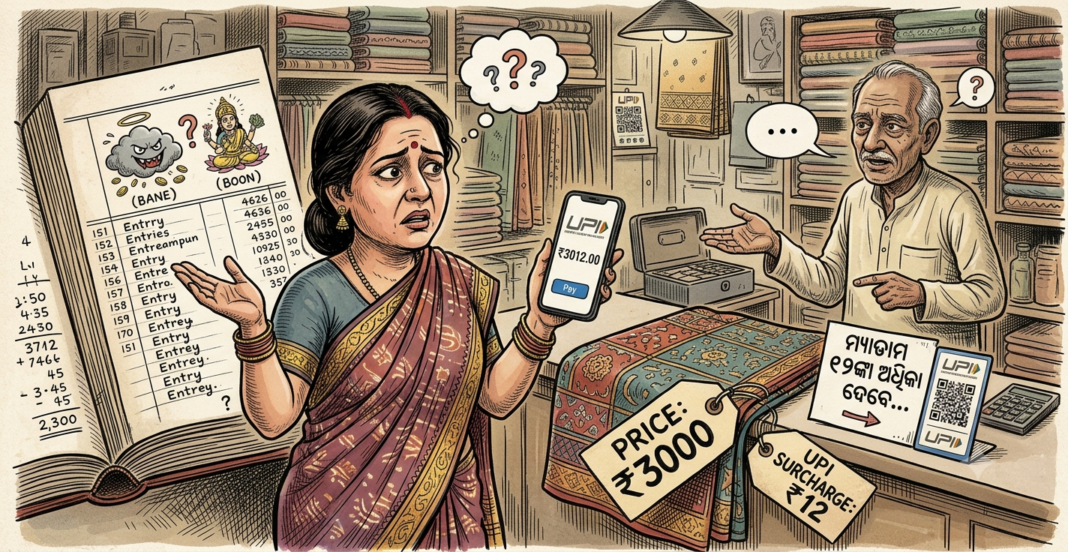
Industry analysts point out a potential structural friction: while businesses are legally barred from adding direct digital payment surcharges at the counter, some retailers may gradually adjust retail base prices upward to absorb the new processing expense. Alternatively, certain mid-sized establishments might encourage customers making larger purchases to switch back to cash or direct bank transfers to bypass the fee.
As implementation approaches, policymakers face the delicate task of monitoring merchant compliance while ensuring that the introduction of processing fees does not weaken the momentum of broader digital adoption. Launched in April 2016 by the National Payments Corporation of India alongside twenty-one participating commercial banks, the platform was conceived as an interoperable digital public utility. Today, as policy discussions intensify around introducing a Merchant Discount Rate on select high-value transaction volumes, the country’s core financial technology platform finds itself navigating a classic economic dilemma: balancing a zero-cost public utility model with the long-term financial sustainability of the banking infrastructure supporting it. Combined with the rapid rollout of affordable mobile data and zero-balance bank accounts under the Jan Dhan initiative, UPI transitioned from a novel tech trial into daily essential infrastructure. By late 2024, the platform was handling over 16 billion transactions a month worth more than ₹23 lakh crore—accounting for nearly half of all real-time digital payments globally.
instagram.com/save2gain