



There was a time when taking a loan in India required thick stacks of paperwork, endless patience, and, above all, physical collateral like land, fixed deposits, or family gold. Today, borrowing takes less than two minutes on a smartphone. With a quick tap on a Buy Now, Pay Later app or a pre-approved credit card alert, tens of thousands of rupees land directly in a salary account without a single asset pledged in return.
India is experiencing an unprecedented explosion in unsecured retail credit. While this digital lending revolution has made borrowing easier than ever, it has also quietly set a dangerous trap for millions of households while posing fresh challenges for the country’s banking system.
Why Borrowing Has Become So Effortless
The catalyst behind this rapid expansion is India’s modern digital infrastructure. By combining digital identity verification, fast bank account checks, and smart algorithms, lenders no longer need to assess physical assets. Instead, they analyze digital footprints and online spending habits to determine whether someone qualifies for a loan in real time.
At the same time, traditional attitudes toward borrowing have shifted significantly. For younger, urban generations, taking on debt is no longer reserved for major life events like buying a house or paying for higher education. It has increasingly become a tool for everyday spending—funding impulse purchases, vacations, and electronics. When aggressive marketing from fintech apps meets everyday living costs that outstrip salary growth, instant personal loans quickly become a routine way to cover monthly cash shortages.
The Hidden Cost for Daily Household Finances
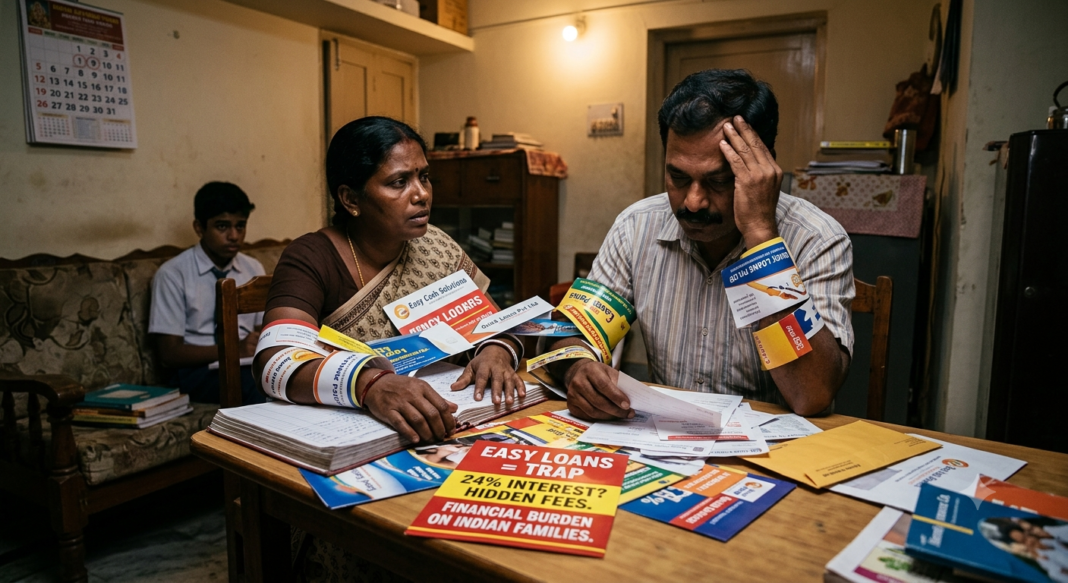
At the household level, this frictionless borrowing creates serious long-term risks. The primary danger is loan stacking, which happens when a borrower takes out small loans across multiple apps simply to clear existing debts. What starts as a temporary fix to cover a monthly shortfall rapidly turns into a snowballing cycle of high-interest repayments.
When payments are inevitably missed, the consequences hit hard. A few forgotten balances on a short-term shopping app can ruin a individual’s credit score, making it extremely difficult to secure important loans in the future, such as a home or education loan. Furthermore, while regulated banks follow clear rules, rogue digital lending apps often resort to harsh recovery tactics, causing severe mental stress and social embarrassment for struggling families.
Regulators Are Stepping In
The risks extend beyond individual families to the wider financial system. Unsecured personal loans and credit cards historically carry higher default rates than loans backed by tangible assets. When economic conditions worsen, these are usually the first bills people stop paying because there is no property or gold for the bank to seize.
To prevent this trend from spiraling out of control, the Reserve Bank of India stepped in to cool down the market. By forcing banks and financial institutions to hold higher financial reserves against personal loans and credit cards, regulators made it more expensive for lenders to hand out easy money. Tighter rules were also introduced to ensure that loan apps clearly show the total annual interest rates and hidden fees upfront.
Building a Safer Financial Future
Unsecured credit is not inherently bad. When used responsibly, it provides essential emergency funds and helps people manage temporary financial hurdles. However, an economy cannot run safely on constant, impulse-driven borrowing.
Lenders must focus on whether a customer can genuinely afford to pay back a loan rather than relying solely on automated approval tools. On the other side, borrowers need to draw a clear line between debt that builds long-term value and debt spent on short-term wants. Money has never been easier to borrow in India, and the real challenge now is ensuring that easy access does not lead to heavy financial distress.
By Capital Chanakya